




In 2024, our U.S. research revealed that resume dishonesty is more common than many might expect. Nearly two-thirds (64.2%) of American respondents admitted they had lied on their resume at least once, with previous salary (32.8%), skills (30.8%), and work experience (30.5%) ranking as the most common areas of exaggeration.
Three years later, we brought the same research to the UK to discover whether Brits are just as likely to bend the truth on their CVs and during job interviews. We surveyed 1,004 UK adults, asking about everything from CV embellishments and interview dishonesty to their views on using Artificial Intelligence (AI) throughout the hiring process.
With the UK job market continuing to decline and job postings down 13% year on year as of June 2026, [1] competition for roles is becoming increasingly tough. Around 12.7 million employed Brits are actively job hunting each day, and with just 2% of candidates selected for an interview after applying, are more people feeling pressured to exaggerate their experience or qualifications to stand out? Read on to find out what we uncovered.
Key findings:
- Our research found that almost half (46.3%) of UK adults admitted to lying on their CV, with one in five (19.9%) saying they had done so more than once.
- Skills (52.3%) topped the list of the most common things people lied about, followed by previous work experience (43.4%) and job titles (37.9%).
- Just over one in ten (13.8%) respondents said they had been caught lying on their CV, but 6.2% admitted it did not stop them from doing it again.
- More than a third (37%) said they had lied during a job interview, with this rising among Boomers (aged 55–64), where 81.4% said they had done so.
- Just over a third (34%) of respondents said they had used AI during the hiring process, while a further 32.3% said they would consider using it in the future.
- One in five (20.1%) believed using AI to correct grammar and spelling during the hiring process was an acceptable use of the technology.
How many Brits admit to lying on their CV?
Our research found that almost half (46.3%) of participants admitted to lying on their CV. While just over a quarter (26.4%) said they had only done it once, almost one in five (19.9%) admitted that they had lied on multiple occasions. In comparison, our U.S. study in 2024 found that more than three in five (64.2%) people surveyed said they had lied on their resume at least once.
Men were more likely than women to admit to lying on their CV (55.9% compared with 39%). By generation, Millennials (those aged 35 to 44) were the most likely to say they had lied, with 51.8% admitting to doing so. In contrast, Boomers (aged 55 to 64) were the least likely to have lied. Nearly two-thirds (65.7%) said they had never lied on their CV, compared with 34.3% who admitted they had.
When it came to what candidates were most likely to exaggerate, skills topped the list, with over half (52.3%) admitting they had embellished them. Previous work experience (43.4%) and job titles (37.9%) were the next most common areas people admitted to stretching the truth. At the other end of the scale, respondents were least likely to lie about their university degree (6.5%) or personal details, such as their name or address (6.5%).
Interestingly, our 2024 U.S. research found that college degrees (i.e. university degree) were the fourth most commonly falsified item on resumes.
The most common lies told on CVs
| Rank | Most common lies told on CVs | Percentage of respondents |
|---|---|---|
| 1 | Skills | 52.3% |
| 2 | Previous work experience | 43.4% |
| 3 | Job titles (i.e. to make them sound better) | 37.9% |
| 4 | Experience using equipment or software relating to the job you’re applying for | 26.5% |
| 5 | Salary at previous jobs | 20.4% |
| 6 | High school or college qualifications | 18.9% |
| 7 | References from previous employers | 10.5% |
| 8 | Personal details – name, address, age etc | 6.5% |
| 8 | University degree | 6.5% |
Men were also more likely than women to exaggerate their skills on their CV, with 56% admitting to doing so compared with 48.2% of women.
Just over one in ten (13.8%) say they got caught out
Among respondents who admitted to lying on their CV at least once, just over one in ten (13.8%) said they had been caught. Of those, 7.5% said the experience was enough to stop them from lying again. However, 6.2% admitted they continued to exaggerate or lie on their CV despite being caught.
Respondents aged 25 to 34 were the most likely to say they carried on lying even after being caught, with 9.7% admitting they were undeterred. In contrast, those aged 35 to 44, despite being the generation most likely to lie overall, appeared more likely to learn from the experience. Just 4.9% said they continued to lie after being caught.
For almost half (47.9%) of those caught out, no action was taken against them
For almost half (47.9%) of respondents who were caught lying on their CV, there were no consequences. However, not everyone was so fortunate. More than one in five (22.5%) said their job offer was withdrawn after the lie was uncovered, while 8.5% said they were dismissed from the role.
The result of being caught lying on a CV
| Result of lying on a CV | Percentage of respondents who have been caught out |
|---|---|
| No action was taken | 47.9% |
| The job offer was withdrawn | 22.5% |
| Fired from the job | 8.5% |
| It affected professional reputation | 7% |
| Received a monetary fine | 7% |
| Investigated by the police | 4.2% |
| Other | 2.8% |
Fewer respondents said the consequences were more severe. Just 7% said they had received a financial penalty, while a further 7% said being caught had damaged their professional reputation. Even fewer reported being investigated by the police (4.2%).
Although lying on a CV is not a criminal offence in itself in the UK, knowingly providing false information to secure employment could amount to fraud. [2] While prosecutions are rare, those convicted can face a maximum prison sentence of up to 10 years. [3]
Despite this, a notable UK case reached its conclusion in 2022 when a former chief executive was required to repay part of his earnings after it was discovered that he had invented key academic and professional credentials. [4]
How many Brits admit to lying during a job interview?
The survey also explored how often candidates bend the truth during job interviews.
While 63% of respondents said they had never lied in a job interview, more than a third (37%) admitted they had. Of those, 18.6% said they had lied on one occasion, while a similar proportion (18.3%) admitted they had done so multiple times.
Lying during interviews was most common among Boomers (those aged 55 to 64), with a staggering 81.4% admitting they had done so. Gen X (aged 45 to 54) followed closely behind at 69.7%. In comparison, less than half (47.5%) of Gen Z respondents (aged 18 to 24) said they had ever lied during an interview.
Men were also more likely than women to admit to lying during a job interview, with 47.6% admitting they had done so compared with 28.8% of women.
Personal skills are the most common to lie about during the interview process (53.6%)
Among respondents who admitted to lying during an interview, personal skills were the most common area of exaggeration, with 53.6% saying they had embellished them. Previous work experience followed closely behind at 52.3%, while just over a quarter (26.4%) admitted to lying about their previous salary.
Most common things to lie about during an interview
| Rank | Most common things to lie about during an interview | Percentage of respondents who have lied during an interview |
|---|---|---|
| 1 | Personal skills | 53.6% |
| 2 | Previous work experience | 52.3% |
| 3 | Salary at previous jobs | 26.4% |
| 4 | Experience using equipment or software relating to the job | 25.9% |
| 5 | High school or college qualifications | 10.0% |
| 6 | University degree | 3.8% |
| 7 | Personal details – name, address, age etc | 3.2% |
Job interviews can be nerve-wracking, with candidates often looking for ways to feel more prepared and confident. While practising answers and researching the company are important, small habits beforehand, such as the foods to eat before an interview or the music to listen to before an interview, could also help support focus, energy levels and a positive mindset.
How do Brits feel about using AI when job hunting?
AI tools such as ChatGPT are now used by millions of people around the world. [5] With the ability to write, research and generate content in seconds, their growing role in the hiring process has sparked debate about where to draw the line between assistance and dishonesty.
To explore these attitudes, we asked respondents about their use of AI during the hiring process, as well as whether they felt it was acceptable.
Just over a third (34%) said they had used AI to help with a CV, cover letter or job application at least once, while 66% said they had never used it. However, even among those who hadn’t used AI, opinions were split. A third (33.8%) said they would never consider using it, while a similar proportion (32.3%) said they had not used AI yet but would consider doing so in the future.
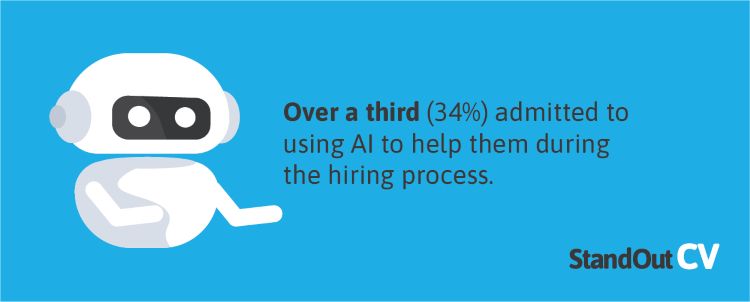
Among those who had used AI, 18.4% said they had done so once, while 15.5% admitted they had used it on multiple occasions.
AI use was most common among younger generations. More than half (54.9%) of respondents aged 25 to 34 said they had used AI during the hiring process, followed by 45.8% of those aged 18 to 24. In comparison, just 16.3% of respondents aged 55 to 64 said they had used AI.
Compared with our U.S. research from 2024, attitudes towards AI appear to have shifted. At the time, almost three-quarters (73.4%) of U.S. respondents said they would consider using AI to help them lie on their resume. The latest UK findings suggest people are taking a more cautious approach to AI, perhaps as awareness of its capabilities and limitations has grown.
Over two-fifths (43.6%) think using AI in the hiring process is dishonest
Despite its growing popularity, many respondents remain sceptical about using AI when applying for jobs. More than two in five (43.6%) said they believe using AI during the hiring process is dishonest, even if it has become common practice.
Almost a quarter (23%) went a step further, saying they considered it unethical. In contrast, one in five (21.5%) felt AI has simply become a normal part of the hiring process.
What do participants think about using AI during the hiring process?
| Rank | Opinions on using AI during the hiring process | Percentage of respondents |
|---|---|---|
| 1 | I think it is dishonest but common | 43.6% |
| 2 | I think it is unethical | 23% |
| 3 | I think it is a normal part of the hiring process | 21.5% |
| 4 | I think small exaggerations are acceptable | 20% |
| 5 | I think it gives applicants an unfair advantage | 17.6% |
| 6 | I think its harmless | 16.1% |
| 7 | I think it is a practical way to improve job prospects | 10.4% |
| 8 | I think it should have serious consequences if discovered | 9.2% |
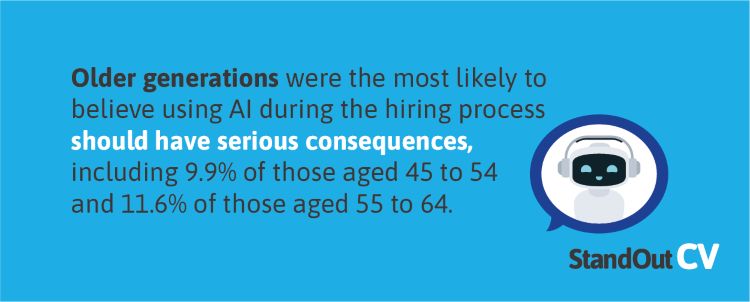
Just under one in ten (9.2%) respondents believed using AI during the hiring process should carry serious consequences if it is discovered. This view was slightly more common among older generations. Just less than one in ten (9.9%) of those aged 45 to 54 agreed, followed by 11.6% of respondents aged 55 to 64. In comparison, just 7.3% of Gen Z (aged 18 to 24) felt the same.
A fifth (20.1%) say correcting grammar and spelling is an acceptable use of AI
We also asked respondents where they believe the line should be drawn when using AI while applying for jobs.
One in five (20.1%) said using AI to correct spelling and grammar was acceptable, making it the most widely accepted use of the technology. A further 18.4% felt it was acceptable to use AI to improve wording and clarity, while 14.1% said rewriting content to sound more professional was also appropriate. Just over one in ten (10.9%) believed it was acceptable to use AI to tailor a CV or cover letter to a specific job description.
What are acceptable uses of AI during the hiring process?
| Rank | Acceptable uses of AI during the hiring process | Percentage of respondents |
|---|---|---|
| 1 | Correcting spelling and grammar | 20.1% |
| 2 | Improving wording and clarity | 18.4% |
| 3 | Rewriting content to sound more professional | 14.1% |
| 4 | Tailoring a CV or cover letter to a specific job description | 10.9% |
| 5 | Suggesting skills or achievements to highlight | 9.6% |
| 6 | Writing a first draft based on information provided by the applicant | 8.1% |
| 7 | Creating slides for interview presentations | 4% |
| 8 | Completing interview tasks | 2.5% |
| 9 | Exaggerating existing skills or experience | 2.3% |
| 10 | Answering questions in interviews | 2.2% |
| 11 | Completing application questions on behalf of the applicant | 1.9% |
| 12 | Inventing skills, qualifications, or experience | 1.8% |
On the other hand, very few respondents (1.8%) believed it was acceptable to use AI to invent skills, qualifications or experience. This is despite more than half (52.3%) of those who admitted to lying on their CV saying they had exaggerated these areas.
Just one in ten (9.9%) say using AI during the hiring process is “very unfair”
When asked how fair they believe it is to use AI to improve a CV, cover letter or job application, opinions were largely positive. Almost two in five (39%) respondents said they considered it to be somewhat fair, while a further 20.3% said they viewed it as very fair.
However, some respondents felt differently. Just over one in ten (12.7%) said using AI in this way was somewhat unfair, while fewer than one in ten (9.9%) considered it very unfair. The findings highlight the ongoing debate around where AI fits within the modern hiring process, with many viewing it as a useful tool while others remain cautious about its role.
Methodology
A survey on behalf of StandOut CV was conducted in July 2026 and asked 1,004 UK adults about their experience and attitudes towards lying on CVs, or during job interviews. The questions also covered topics such as using AI during the hiring process.
For some questions, respondents were able to select multiple answers, so the results do not all add up to 100%.
The demographics of the survey respondents were:
Age:
- 18-24 – 9.6%
- 25-34 – 21.4%
- 35-44 – 27.7%
- 45-54 – 24.2%
- 55-64 – 17.1%
Gender:
- Female – 56.7%
- Male – 43.3%
Sources
[1] Hiring Lab, ‘June 2026 UK Labour Market Update: Job Postings Continue to Slide’, 2026
[2] Bloomsbury Square, ‘What you need to know about the complexities of lying on your CV’, 2025
[3] Aston Bond Law Firm, ‘Have You Ever Lied on Your CV? You Might Want to Think Twice’, 2025
[4] Croner, ‘CV Fraud can be Prosecuted – When Should it be?’, 2022
[5] Demandsage, ‘ChatGPT Statistics (July 2026) – Latest Active Users Data’, 2026